|

Understanding Stress |
|
Understanding Stress |
Different types of StressDid you know there are three kinds of stress?
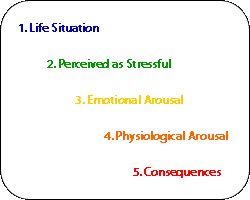
Life would be dull without joyful stressors and distressors. For example, if you are experiencing stress about an upcoming test, you will be more likely to study more intensely than if you are not concerned. If you are preparing to speak in front of a group of people and are apprehensive, you will probably be motivated to write a better speech. Stress can be useful, stimulating and welcoming. The Stress ModelTo understand the process of stress, take a look at this stress model. 1. Stress begins with a life situation (also known as a stressor) that takes you out of balance. This can include: changes in temperature, a threat from another person, the death of a loved one or some other change in your life to which you need to adapt. 2. Then the situation may be perceived as stressful.
3. What occurs next is an emotional reaction to the distressing event. This might include feelings of fear, anger, insecurity, frustration, or helplessness. 4. These feelings lead to physiological arousal. This involves an increase in heart rate, muscle tension, and blood pressure. 5. Chronic or prolonged physiological arousal will result in stress-related consequences like illness or disease. Understanding PerceptionsPerceptions are a personal choice and they determine whether or not we find something stressful. Everyone reacts differently to life situations. For example, some people may view the death of a loved one as terrible and dwell on that loss, while others may choose to remember the good times they experienced with that loved one. To see the differences between negative and positive perceptions of stress, take a look at this Stress Perception Chart. When you change your perception and look for the positive aspects of a stressor—not the negative aspects—you are being selectively aware. Thinking positively allows the body to respond in a positive way and lessens the chances of developing a stress-related illness or disease. Your goal should be to develop a selectively aware attitude in every stressful event you encounter. Consequences of StressWhen talking about stress, it is important to understand that the mind and body are connected—the mind is affected by what the body experiences, and the body is affected by what the mind experiences. When you first perceive a life situation as stressful your body may respond with short-term side effects such as an increased heart rate, shallow breathing, heavy perspiration, headache, etc.
Prolonged stress decreases the number of white blood cells, therefore decreasing the body's ability to destroy foreign substances. If you do not learn to manage the stressors in your life you will end up in poor health! |

 The long-term side effects of stress include, but are not limited to: hypertension, stroke, coronary heart disease, ulcers, migraine headaches and cancer.